Algo Portfolio Diversification
Algo Portfolio Diversification: Why One Algo Is Fragile
Algo portfolio diversification for Indian traders: how combining algos works, how to test correlation and drawdown overlap, and how to judge an Algofolio.
Algofolios Explained: Running a Portfolio of Algos Instead of One Strategy
Quick answer
• An algo portfolio runs several rule-based strategies together so one strategy's bad stretch does not decide your whole result. It reduces dependence on one idea, not market risk.
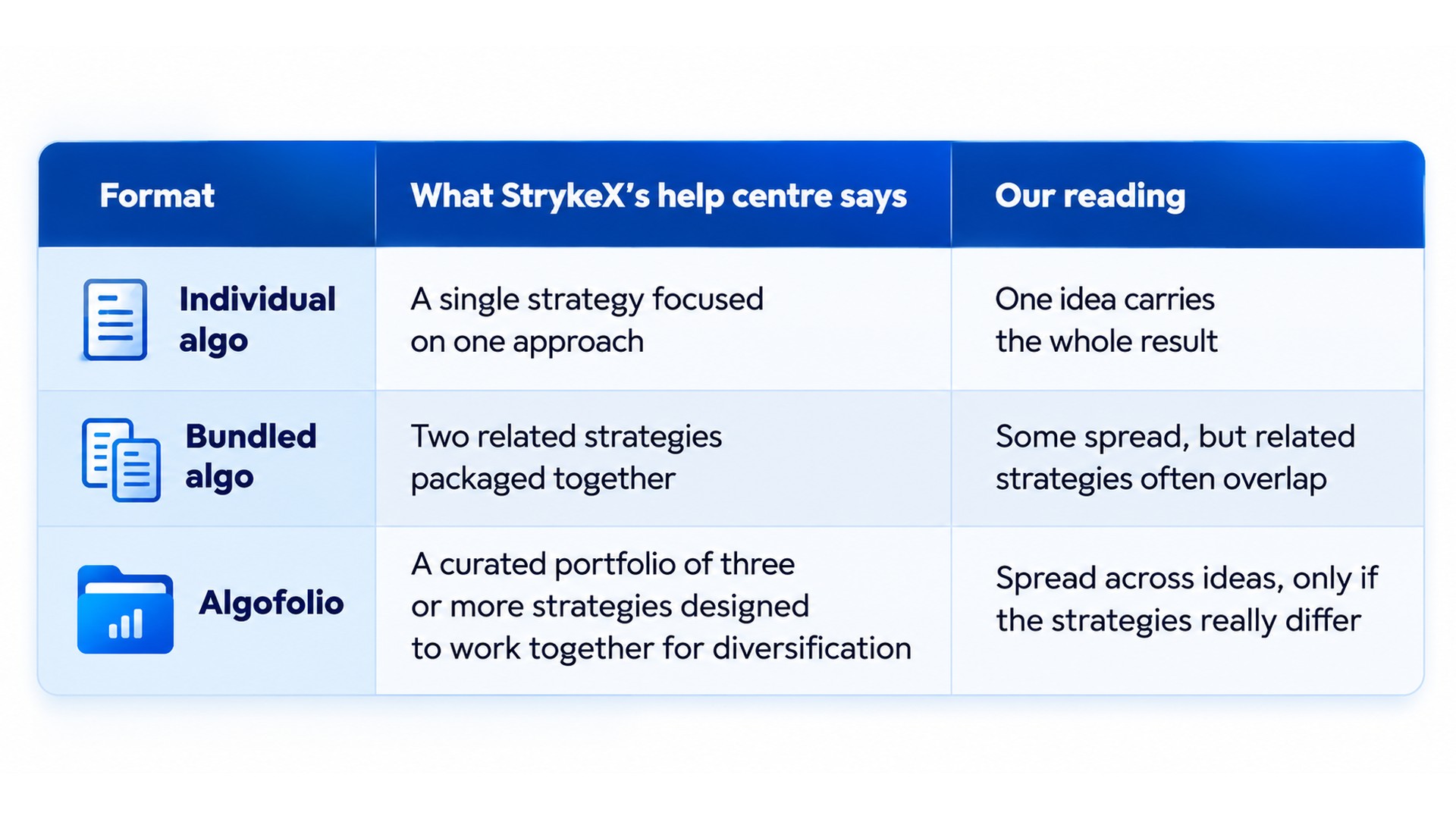
• StrykeX's help centre describes an Algofolio as a curated portfolio of three or more strategies designed to work together for diversification (checked on 3 Oct 2026).
• Diversification works only when the algos lose at different times. Five similar option-selling algos can behave like one bet.
• Check drawdown overlap, not just the number of algos, and size each algo so the combined worst case fits the loss you can accept.
An algo portfolio is a set of rule-based strategies run together, so one strategy's bad stretch does not decide your whole result. It lowers dependence on a single idea but does not remove market risk.
On StrykeX, an Algofolio is the packaged form. Below: how to test overlap, size each algo and judge a bundle.
What is an algo portfolio, and what is an Algofolio?
An algo portfolio is two or more automated strategies running together on one account, each with its own entry, exit and risk rules. An Algofolio is the packaged version on StrykeX.
A second help-centre page calls a bundle a basket meant to diversify risk and smooth the equity curve, the line of your account's cumulative profit and loss. That is a design goal, not a result.
What is an algo portfolio, and what is an Algofolio?
Why is a single algo strategy fragile?
A single strategy depends on one kind of market continuing. When conditions change, it can lose for weeks with nothing running to offset it.
- Regime dependence: a range-bound option-selling algo struggles in a sharp trend, a breakout algo in a sideways market.
- Small samples: a backtest with few trades may only show a friendly stretch.
- One tail risk: a rare, large loss is your entire result.
SEBI's FY25 study found that 91% of individual F&O traders had net losses, about ₹1,05,603 crore in total (reported by Business Standard, 7 Jul 2025). SEBI's FY26 study, published on 20 Aug 2026, put the share at 87.7% and the loss at about ₹91,685 crore (reported by ETV Bharat). They cover individual traders, not algos, so read them as context on risk.
How does combining algos reduce risk?
Combining algos reduces risk only when their losing periods do not line up. Then one algo's gain offsets another's loss, and the combined drawdown, the fall from a peak to the next low, is smaller than either alone.
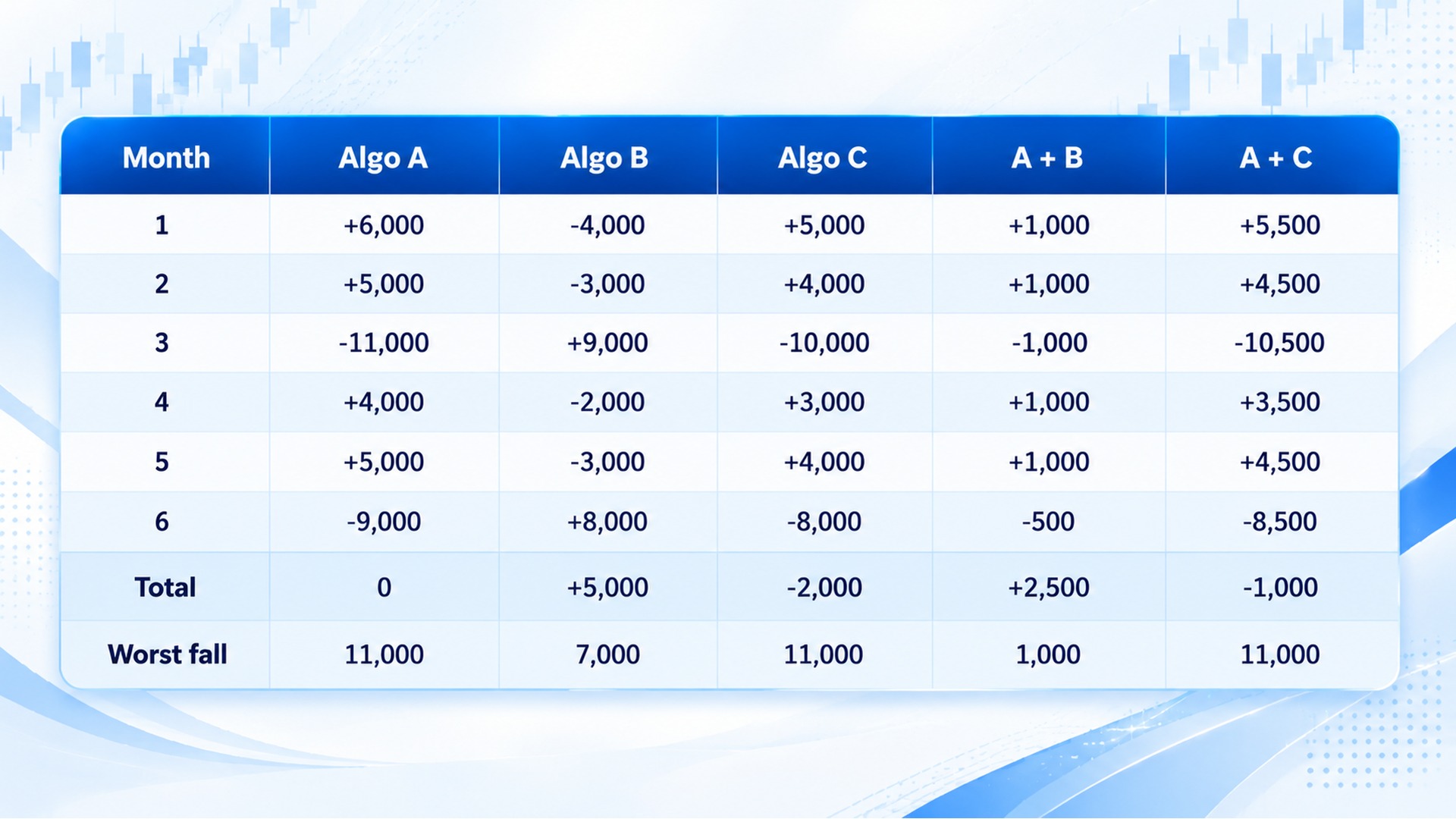
Hypothetical example. Invented monthly rupee figures. Algo B moves opposite to Algo A, which real pairs rarely do so cleanly. Algo C is a near copy of A. Each mix splits capital half and half.
Splitting capital between A and B cuts the worst fall from ₹11,000 to ₹1,000. Splitting between A and C leaves it at ₹11,000, because both lose in months 3 and 6. The lesson is timing, not count: a third or fourth algo helps only if it loses in different months.
How does combining algos reduce risk?
What does correlation mean for algos, and how do you measure it?
Correlation is a number from -1 to +1 showing how closely two series move together. For algos, measure it on daily or weekly profit and loss, then look separately at the worst days.
Near +1 means the algos win and lose together, near 0 means no relationship, and near -1 means they move opposite. Longin and Solnik (1995) found that correlations tend to rise in market stress, so a calm-month pair may not stay unrelated. One quant author reads drawdown correlation below 0.3 as genuine diversification and above 0.6 as redundant, a rule of thumb, not a standard. To check overlap:
- Export daily profit and loss for each algo over the same dates. Fill no-trade days with zero.
- Put them in adjacent spreadsheet columns and use =CORREL(range1, range2) for each pair.
- Mark each algo's five worst days and count how many fall on the same dates.
- Add the algos together, draw the cumulative line and read the combined worst fall.
Is the number of algos what matters?
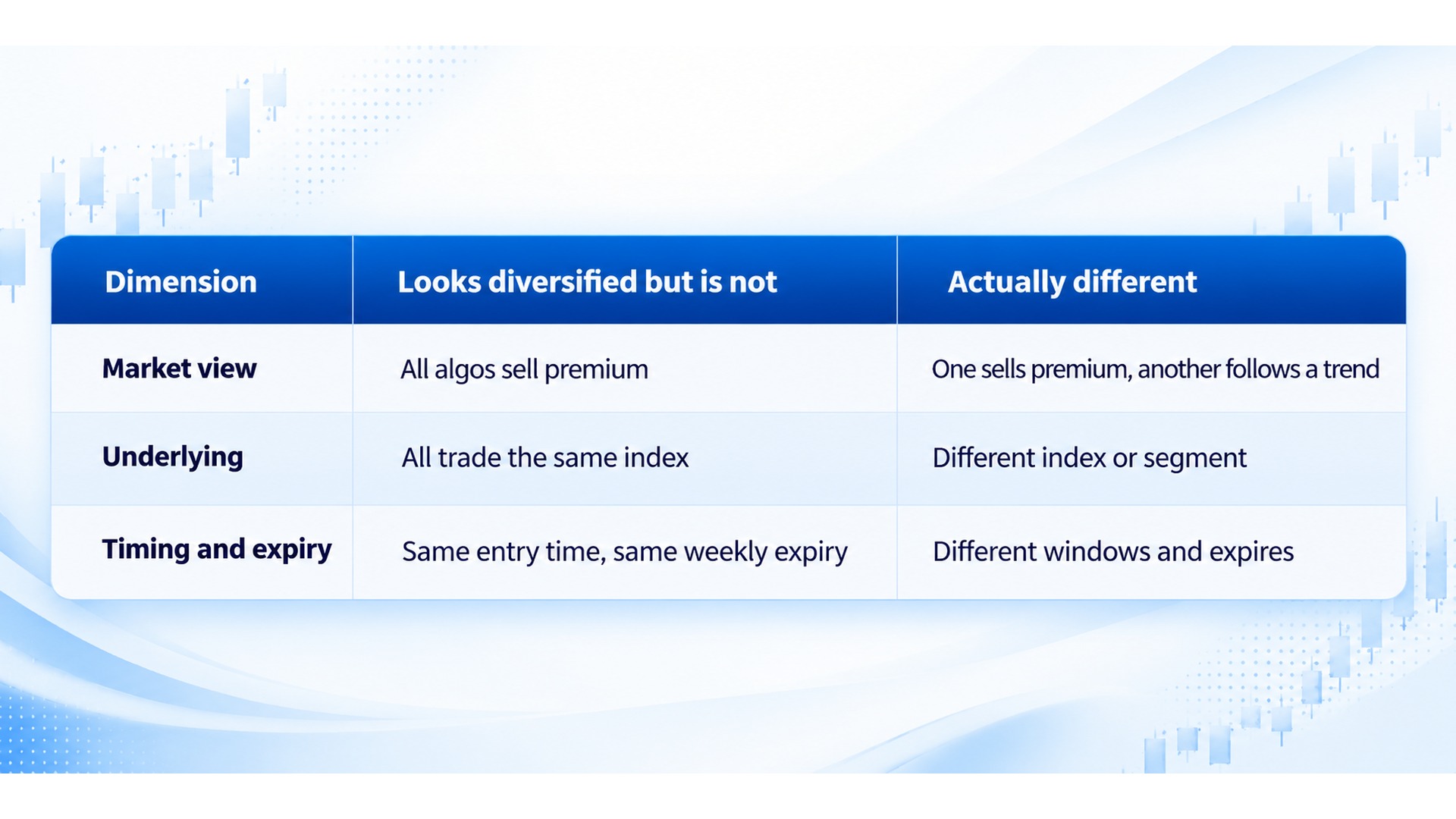
No. What matters is how many different bets you hold. Five short-premium algos on Nifty weekly options can be one bet in five costumes.
There is no proven magic number. One quant author suggests five to ten strategies, a starting point to test against your own overlap.
Is the number of algos what matters?
How much capital should each algo in a portfolio get?
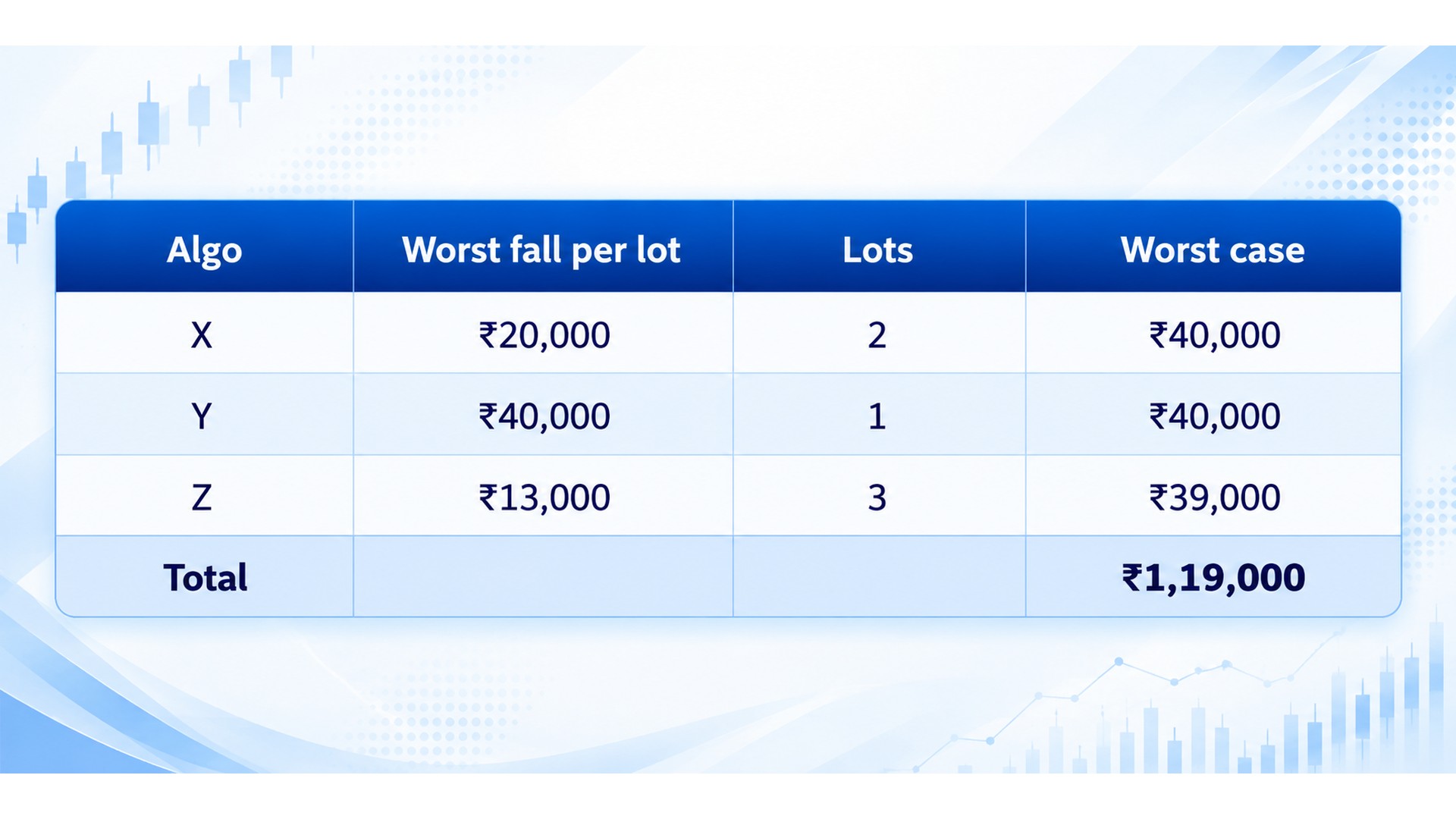
Size each algo by its worst historical fall, not by equal rupees. Then check that the sum of all worst cases, assuming they overlap, fits inside the loss you can accept.
Hypothetical example. On a ₹10,00,000 account you accept a 12% bad spell, which is ₹1,20,000. With three algos that is ₹40,000 each, divided by each algo's worst fall per lot and rounded down to whole lots.
Past falls are not a ceiling, so keep spare margin. Whole lots mean a small account may not fit three algos. See Algo Trading Accuracy Percentage: Why It Misleads and White Box vs Black Box Algo Trading: SEBI Rules Explained
How much capital should each algo in a portfolio get?
What are the limits of an algo portfolio?
A portfolio does not remove market risk, and it adds margin needs and monitoring.
When an algo portfolio does not help
If every algo sells options on the same index, a sharp one-way move can hurt all of them in the same session. More algos then means more exposure, not less. A mix reduces dependence on one idea. It does not protect you from the market.
- Shared risk in stress: correlations tend to rise in a sharp fall, so algos that looked unrelated can lose together.
- Margin and loss size: StrykeX's help centre says option selling can lose more than you put in and advises stop-losses (checked on 3 Oct 2026).
- Averaging hides problems: a strong algo can mask a weak one.
- Opacity: under SEBI's 4 Feb 2025 circular, an algo whose logic the user cannot see is a black-box algo, and its provider must register as a Research Analyst and keep a detailed research report. See StrykeX News: Press Coverage Labelled and How to Verify It and the uTrade Algos vs Stratzy vs StrykeX: 2026 Comparison. Registration is a baseline for accountability, not evidence that a bundle will perform.
How do you judge an Algofolio before you deploy it?
Read what each algo does, test for overlap, check the numbers, and size to your own loss limit before real money goes in.
- Find each algo's type, underlying and entry window. If the logic is not disclosed, treat it as a black box.
- Look for overlap: same index, same expiry, same time window.
- Ask for each algo's drawdown, the combined drawdown, and whether figures are backtest, forward test or live.
- Check the margin needed to run everything at once in your broker account's margin calculator.
- Set your own combined loss limit, size each algo to it, and run the mix in Forward Test first. From idea to live order on StrykeX walks through the lifecycle.
- Confirm you can pause one algo without touching the others. The help centre says an individual Pause holds new entries while still managing open positions (checked on 3 Oct 2026).
- Review monthly or quarterly against a pause rule written in advance, and recompute correlation, because overlap shifts with the market.
Related articles
• StrykeX Complaints: Every Issue Raised in 2025–26, and How We Resolved It
• Is StrykeX a Scam? SEBI Registration Number, Verification Steps & Facts (2026)
Frequently asked questions
What is an Algofolio?
StrykeX's help centre describes it as a curated portfolio of three or more strategies designed to work together for diversification. Check what a given Algofolio contains before deploying.
Is a portfolio of algos safer than one algo?
It can lower dependence on one strategy, but only when the algos lose at different times. If they all sell options on the same index, one sharp move can hurt all of them.
How many strategies should an algo portfolio have?
There is no proven number. One quant author suggests five to ten, a rule of thumb. Whole lots and margin often cap the count on smaller accounts.
How do you check if two trading strategies are correlated?
Put daily profit and loss for both in two spreadsheet columns and use CORREL. Then compare each algo's worst days, because drawdown overlap matters more than the average.
Can algos in a portfolio lose money at the same time?
Yes. Correlations tend to rise during market stress, so algos that look unrelated in quiet months can lose together in a sharp fall.
StrykeX — By Stockwiz Technologies