Market Updates
What "Exchange-Empanelled Algo Vendor" Actually Means And Why It Protects You
You've probably seen the phrase on a trading platform's website — "exchange-empanelled," often sitting next to a vendor code or a registration number — and skimmed past it as marketing. After SEBI's 2026 framework, it's worth slowing down, because that phrase now carries real weight. It's one of the cleanest signals you have for telling a legitimate algo provider from a risky one.
What "Exchange-Empanelled Algo Vendor" Actually Means (And Why It Protects You)
You've probably seen the phrase on a trading platform's website — "exchange-empanelled," often sitting next to a vendor code or a registration number — and skimmed past it as marketing. After SEBI's 2026 framework, it's worth slowing down, because that phrase now carries real weight. It's one of the cleanest signals you have for telling a legitimate algo provider from a risky one.
The phrase, decoded
To "empanel" simply means to be formally added to an approved list. An exchange-empanelled algo vendor is a provider that the stock exchanges — NSE, BSE — have formally recognised and listed as approved to offer algorithmic trading products through brokers.
That recognition isn't a logo a company awards itself. It's a status granted after the exchange's own process, and it comes with a vendor code that identifies the provider on the exchange's records.
Why it matters now, when it mattered less before
Before the 2026 framework, the line between a serious provider and an anonymous "algo seller" was blurry. Plenty of operators connected loosely through broker APIs with no formal standing and no accountability.
The framework redrew that line hard. An algo provider can no longer connect directly to an exchange or operate as an unrecognised box. To offer products legitimately, a provider has to:
- Empanel with the exchanges — get on that approved list.
- Pass the broker's due diligence — because the broker is now the accountable principal for any algo on its platform, brokers vet providers properly.
- Register strategies and carry Algo-IDs where required, so the provider's order flow is traceable.
Each of those is a filter. An empanelled vendor has passed through them. An operator that can't tell you its empanelment status hasn't — and that tells you something.
What it does (and doesn't) guarantee
Be clear-eyed here, because trust signals get oversold.
Empanelment does mean: the provider has been vetted, operates inside the regulated framework, produces traceable order flow, and has a real, identifiable standing with the exchanges. If something goes wrong, there's an accountable chain rather than a vanished website.
Empanelment does not mean: your strategy will make money, the provider's tools are flawless, or your capital is somehow protected from market losses. No status can promise that, and any provider implying otherwise is waving a red flag regardless of how empanelled they are.
So treat empanelment as a necessary filter, not a sufficient one. It rules out the obvious bad actors. It doesn't replace your own judgement about the product itself.
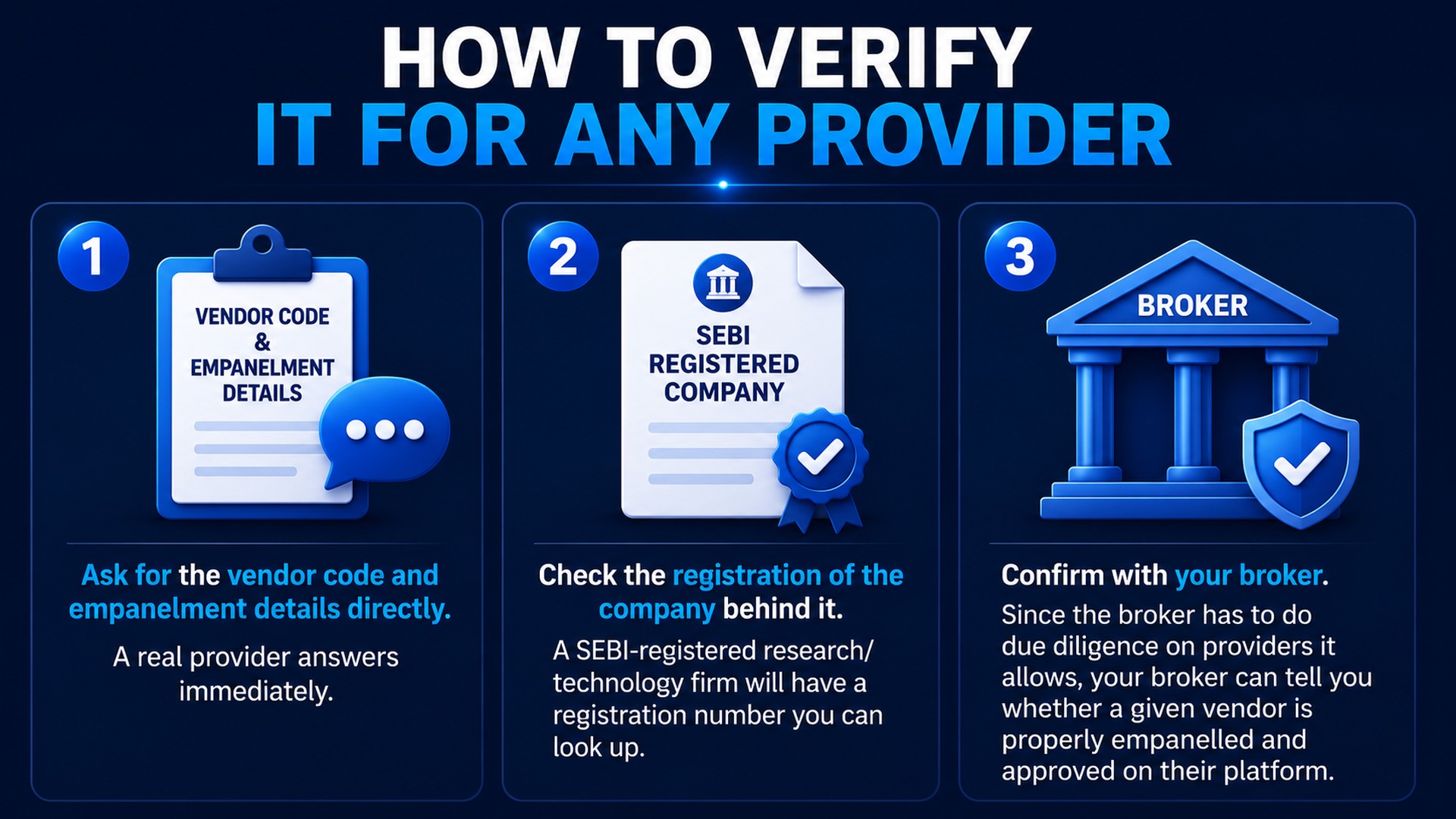
How to verify it for any provider
Don't take the website's word for it:
- Ask for the vendor code and empanelment details directly. A real provider answers immediately.
- Check the registration of the company behind it. A SEBI-registered research/technology firm will have a registration number you can look up.
- Confirm with your broker. Since the broker has to do due diligence on providers it allows, your broker can tell you whether a given vendor is properly empanelled and approved on their platform.
A concrete example
StrykeX is empanelled with both the NSE and BSE and operates inside this framework, with the registration plumbing and traceability built in rather than bolted on. It's run by Stockwiz, a SEBI-registered firm (registration INH000013925). We mention it not to sell you on it here, but because it's a useful template for what the phrase should look like in practice: a named, registered company, a verifiable empanelment, and no promises about returns.
When you're evaluating any provider — us or anyone else — apply the same three checks above. The ones worth trusting will pass them without flinching.
For how empanelment fits with the broker-as-principal model and the rest of the rules, see the SEBI Algo Trading Regulations 2026: The Complete Guide for Retail Traders.
StrykeX — By Stockwiz Technologies