StrykeX Verified P&L and PaRRVA Explained
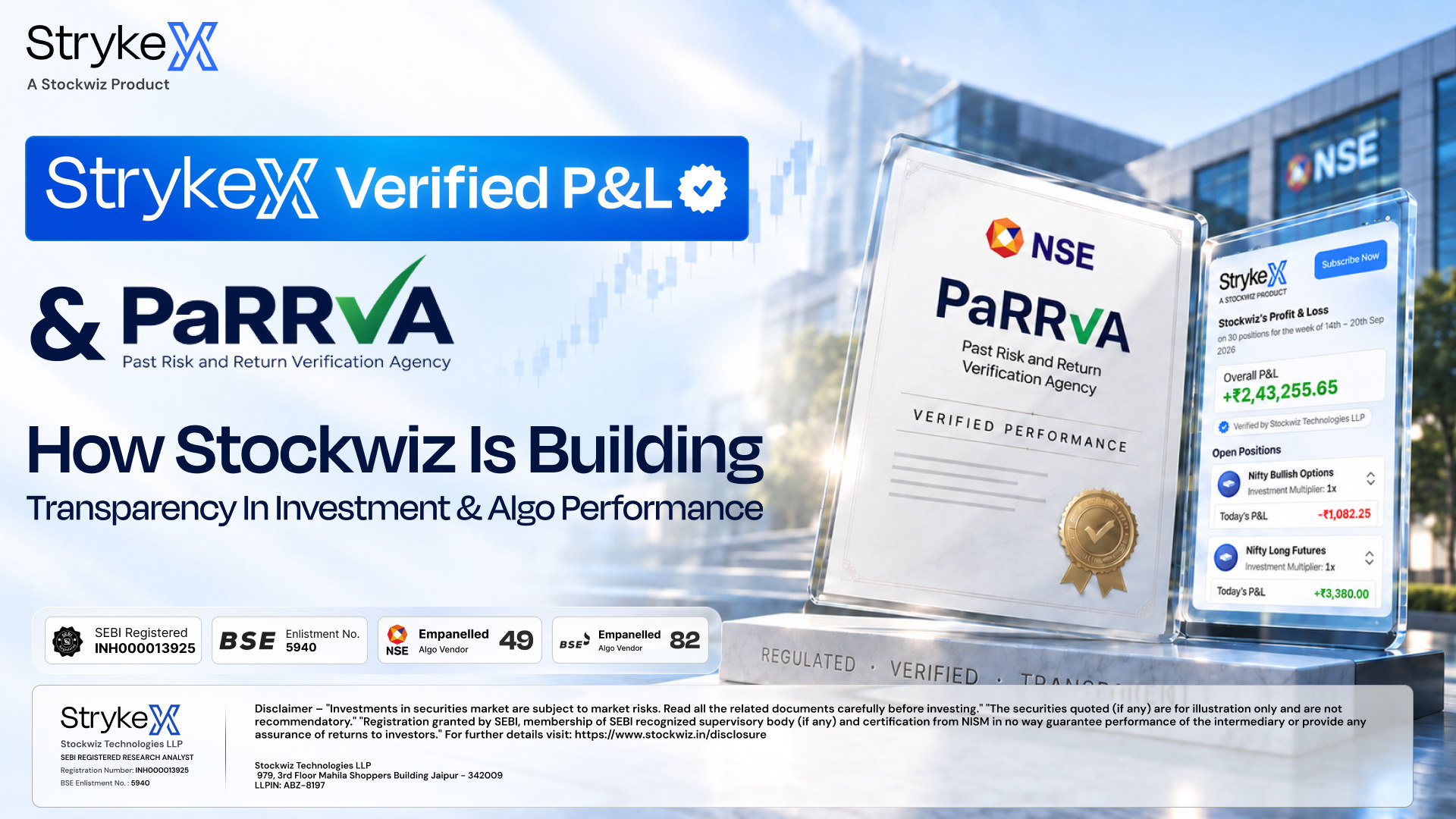
StrykeX Verified P&L and PaRRVA: How Stockwiz Is Building Transparency in Investment & Algo Performance
How StrykeX Verified P&L and NSE's PaRRVA framework work together across the full lifecycle of a trading and research performance claim.
StrykeX Verified P&L and PaRRVA: How Stockwiz Is Building Transparency in Investment & Algo Performance
Every performance claim has a lifecycle — built, tested, deployed, and eventually shown to someone deciding whether to trust it. Stockwiz has built two mechanisms covering the final, most important stage of that lifecycle: StrykeX Verified P&L, which captures real algo trades the moment they happen, and NSE's PaRRVA framework, which independently verifies eligible research performance. Together they cover both halves of what Stockwiz presents — algo strategies and research recommendations — without either resting solely on self-reporting. Neither guarantees future returns.
Every trading or investment claim moves through the same stages: an idea gets built, it gets tested, and — if it holds up — it eventually gets put into practice. The stage that usually goes unexamined is the last one. Once a strategy or a recommendation is genuinely live, how would anyone outside the room actually know whether the numbers being shown are real? Stockwiz has built two mechanisms to answer exactly that, one for algorithmic strategies and one for research performance.
Stage One: Building and Testing
Every strategy starts here — built on an idea, then tested against historical data to see how it might have performed, or run virtually against live prices without any capital actually at risk. Both stages are genuinely useful, and neither is in question. The problem starts only when a result from this stage gets shown with the same confidence as a result from real trading.
Stage Two: Going Live — Where Verified P&L Begins
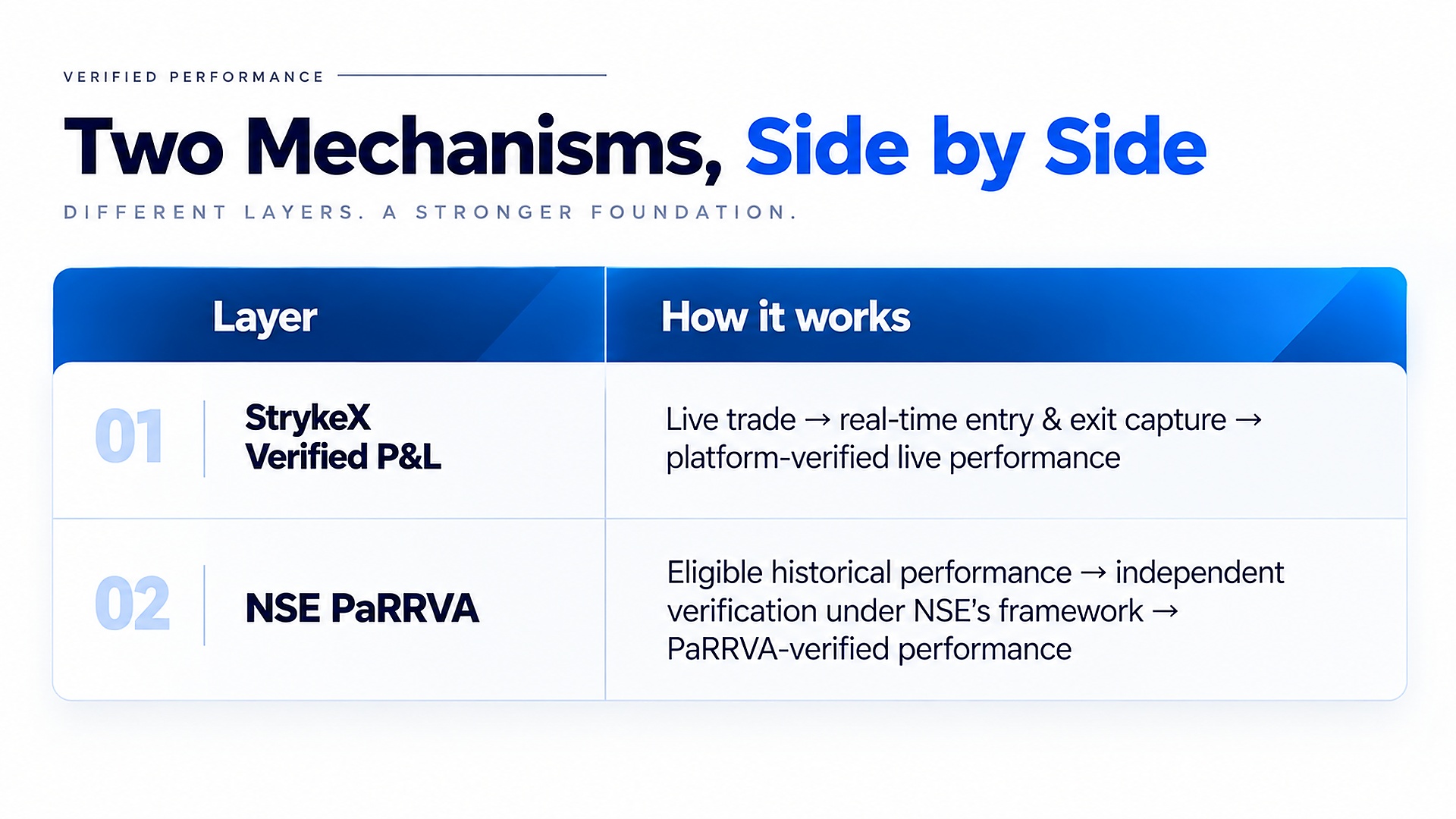
The moment an eligible strategy is deployed live through StrykeX, its trades are generated in real time, and the platform records the entry and the exit as they occur. That record — not a projection, not a reconstruction — is what becomes a Verified P&L.
The Three Categories That Actually Matter
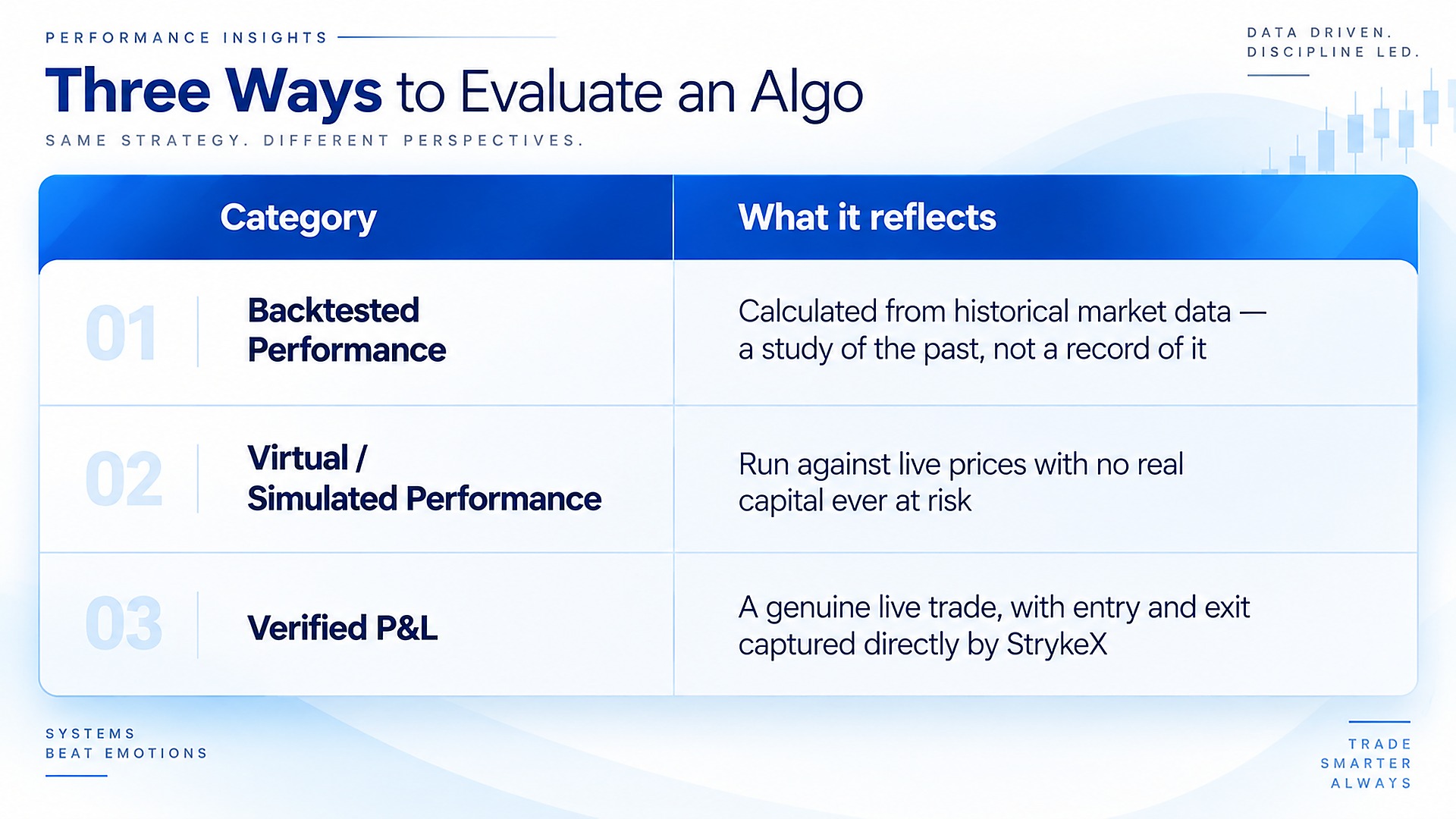
Laid out plainly, the three categories that get lumped together as “performance” are easy to tell apart:
The Three Categories That Actually Matter
Stage Three: A Second Layer, for a Different Kind of Claim
Algo performance isn't the only kind of track record Stockwiz presents. Research performance — Model Portfolios, individual stock recommendations — carries a different structural problem: a Research Analyst reporting its own performance is, by definition, marking its own work. That's why Stockwiz has enrolled with NSE's PaRRVA framework, which independently verifies the past performance presented by eligible SEBI-registered intermediaries, sitting outside the reporting relationship rather than inside it.
Stockwiz has begun using PaRRVA for eligible research performance, including Model Portfolios and individual stock recommendations — an additional, external layer on top of how that historical performance gets communicated
Extending the Same Principle to Algo Performance
The intention is to eventually bring algo performance under the same independent standard. Until the applicable exchange framework permits verification of algo performance through PaRRVA, Verified P&L remains the platform-level mechanism for identifying genuine live algo results. Once permitted, PaRRVA verification will extend to eligible algo performance as well.
Two Mechanisms, Side by Side
Set next to each other, the two layers show how each one gets from a raw claim to something that can actually be checked:
Two Mechanisms, Side by Side
Stage Four: Sharing What's Actually Verified
A performance claim is only as useful as the confidence you can have in it once it's shared. Verified P&L lets any user — not only Stockwiz — share the genuine performance of a strategy they've deployed live, in place of a screenshot or an independently prepared number nobody else can check. For eligible research performance, PaRRVA plays the equivalent role: an external check on a claim, rather than the claim standing entirely on its own.
Applying the Same Bar to Ourselves
Whenever Stockwiz or StrykeX presents genuine performance — algo or research — it goes through one of these two mechanisms. Neither is reserved for marketing use only; both are the same tools available to any user or applied to any eligible research performance Stockwiz itself presents.
The Larger Commitment This Sits Inside
Verified P&L and PaRRVA aren't standalone announcements so much as two more pieces of an ongoing pattern. Stockwiz Technologies LLP is a SEBI-registered Research Analyst (Registration No. INH000013925), publishes its complaint record rather than only the figures that flatter it, and now applies both a platform-level and an exchange-level check to how performance itself gets presented. None of this, individually or together, promises that any strategy or recommendation will make money — but each piece is something that can be checked, rather than simply taken on faith.
What This Means for You in Practice
- Ask what stage a performance figure is coming from. Backtested, simulated, Verified P&L, or PaRRVA-verified — each means something different.
- Don't assume a claim is verified just because it sounds credible. Unless it carries one of these specific labels, treat it as self-reported.
- Remember Verified P&L confirms a live trade, not a forecast. It tells you what happened, not what happens next.
- Remember PaRRVA is scoped to eligible categories today. It doesn't yet cover algo performance, and won't until the applicable exchange framework allows it.
- Treat both as evidence, never as a guarantee. Verified or not, past performance never guarantees what happens next.
Verify These Frameworks Yourself
Stockwiz Technologies LLP's SEBI Research Analyst registration can be checked directly on SEBI's official website. PaRRVA is a framework operated under NSE, the exchange responsible for administering it.
See It for Yourself
Every stage described above is already running on StrykeX Algos. To see it in practice first, our free community walks through the tutorials, and we'll keep it updated as PaRRVA extends to algo performance.
Related Articles
• How Stockwiz Uses PaRRVA and StrykeX Verified P&L for Transparent Performance Reporting
• StrykeX vs Streak by Zerodha: Which Algo Platform Fits Your Trading? (2026)
• How to Build an Algo Trading Strategy (No Coding): StrykeX Builder Tutorial (2026)
• Algo Trading Scams in India: How to Spot and Avoid Them (2026)
Frequently asked questions
What is StrykeX Verified P&L?
A mechanism that captures the genuine, live performance of an algo strategy — trades generated in real time, with entry and exit recorded directly by the platform, distinct from backtested or simulated results.
What is NSE's PaRRVA framework?
NSE's framework for independently verifying the past performance presented by eligible SEBI-registered intermediaries. Stockwiz uses it today for eligible Model Portfolios and stock recommendations.
How do backtested, simulated, and verified performance differ?
Backtested performance is calculated from historical data. Simulated or virtual performance runs against live prices with no real capital at risk. Verified P&L reflects a genuine live trade, captured directly by the platform.
Does PaRRVA currently cover algo performance?
Not yet. Verified P&L is the platform-level mechanism for live algo performance today; PaRRVA verification will extend to eligible algo performance once the applicable exchange framework permits it.
Why does Stockwiz use two separate verification mechanisms?
Because algo performance and research performance are structurally different claims. A live trade can be captured the instant it happens; historical research performance is better suited to an independent, exchange-level check.
Can I share my own live algo performance?
Yes. Anyone who has deployed a strategy live through StrykeX can use Verified P&L to share what it actually did.
Does StrykeX apply Verified P&L to its own performance claims?
Yes. Whenever genuine algo performance is presented, it goes through Verified P&L — the same mechanism available to any user.
Does Verified P&L or PaRRVA verification guarantee future returns?
No. Both confirm what has already happened. Past performance does not guarantee future returns, and investments and trading are subject to market risks.
How should I use these labels when comparing any platform's performance claims?
Check whether a figure is specifically labelled as backtested, simulated, Verified P&L, or PaRRVA-verified before comparing it to anything else — the label carries as much information as the number.
StrykeX — By Stockwiz Technologies