Market Updates
Broker as Principal, Algo Provider as Agent: The Accountability Shift Nobody Talks About
Most coverage of SEBI's 2026 algo rules fixates on the visible stuff — the Algo-ID, the static IP, the order-rate threshold. But the change with the deepest consequences is a quiet structural one that doesn't show up on any settings screen: who is responsible when an algorithm misbehaves.
Before April 2026, the answer was often "nobody, clearly." After, it's "the broker." That single reassignment of responsibility reshaped the entire retail algo industry, and it's worth understanding why.
Broker as Principal, Algo Provider as Agent: The Accountability Shift Nobody Talks About
Most coverage of SEBI's 2026 algo rules fixates on the visible stuff — the Algo-ID, the static IP, the order-rate threshold. But the change with the deepest consequences is a quiet structural one that doesn't show up on any settings screen: who is responsible when an algorithm misbehaves.
Before April 2026, the answer was often "nobody, clearly." After, it's "the broker." That single reassignment of responsibility reshaped the entire retail algo industry, and it's worth understanding why.
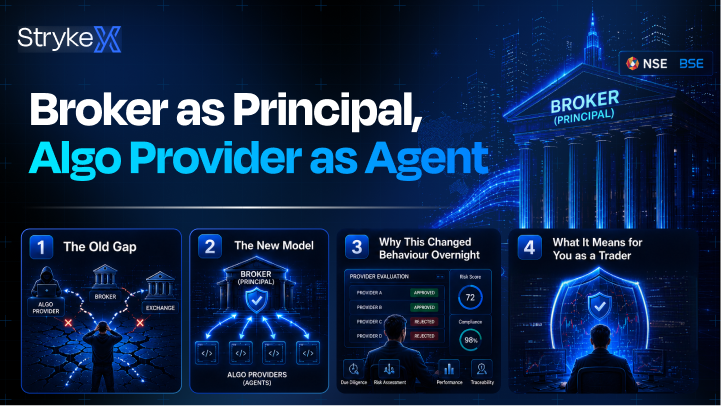
The old gap
Picture the pre-framework setup. A retail trader subscribes to a third-party algo. The algo connects through the broker's API. The orders flow to the exchange. Now something goes wrong — the strategy malfunctions, floods orders, or causes a loss the trader didn't expect.
Who answers for it? The algo provider might be an anonymous operator with a website and a payment link. The broker could say it merely provided API access. The exchange saw orders that looked ordinary. Responsibility diffused into the gaps between everyone, which in practice meant it landed nowhere — usually on the retail trader, who had the least power to prevent the problem.
The new model
The framework fixes this by borrowing a concept from law: the principal-agent relationship.
- The stockbroker is the principal — the accountable party.
- The algo provider is the agent — operating on the broker's behalf, under the broker's responsibility.
In plain language: the broker is now answerable for every algorithm running through its platform, full stop. It can't shrug and point at the vendor. If a provider's tool causes a problem, that's the broker's problem too, because the broker chose to allow it.
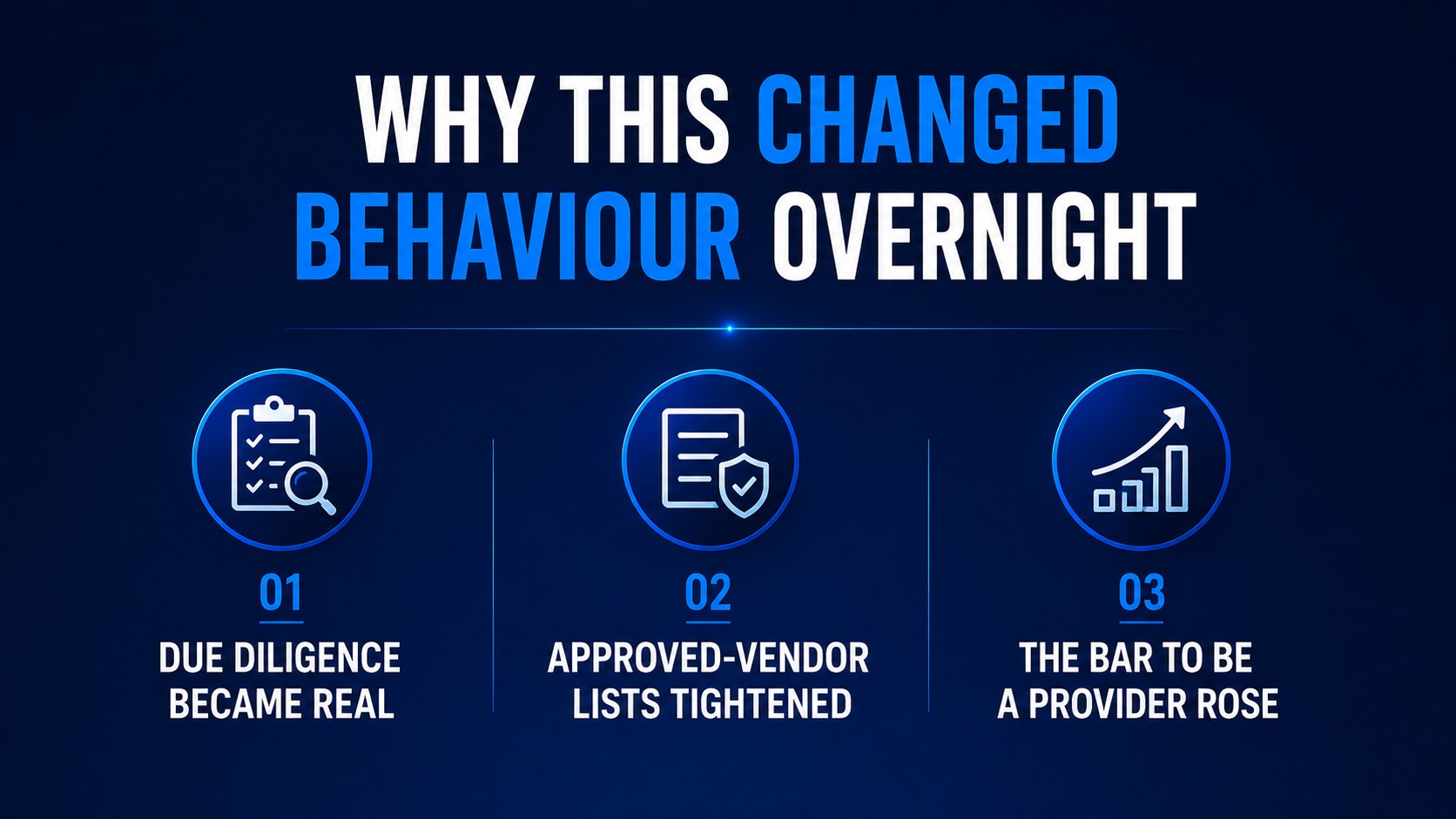
Why this changed behaviour overnight
When you make someone responsible for a risk, they manage that risk. Brokers, suddenly on the hook, did the predictable thing: they got selective.
- Due diligence became real. Brokers now properly vet providers before allowing them near the API, because an unvetted provider is now the broker's liability.
- Approved-vendor lists tightened. Tools that couldn't or wouldn't meet the bar quietly fell off. If an algo you used disappeared from a broker's platform over the past year, the principal-agent shift is often the reason.
- The bar to be a provider rose. Empanelment with the exchanges, traceable order flow, and the ability to pass a broker's scrutiny became table stakes. Anonymous operators couldn't clear it.
That's the framework working as intended. By concentrating accountability in a regulated, identifiable party, it pushed the unaccountable players out without having to name and ban them one by one.
What it means for you as a trader
Two practical implications.
First, the broker you choose now matters more than ever for algo trading. Because the broker carries the responsibility, the quality of their vetting effectively becomes a layer of protection for you. A broker that takes the principal role seriously is filtering out bad providers on your behalf.
Second, the vendor you choose has to be one a serious broker would accept. If a provider can pass a real broker's due diligence and is properly empanelled, that's a meaningful signal. If it can only operate in the shadows, the new structure is designed to keep it away from you.
The takeaway isn't a settings change you need to make. It's a mindset change: in the post-2026 world, the chain of accountability behind your trades is part of your risk management, not just background paperwork.
For how this model interlocks with the rest of the framework, read the complete 2026 SEBI algo trading guide Will SEBI's Rules Ban Retail Algo Trading? (The Short Answer: No)
.
StrykeX — By Stockwiz Technologies